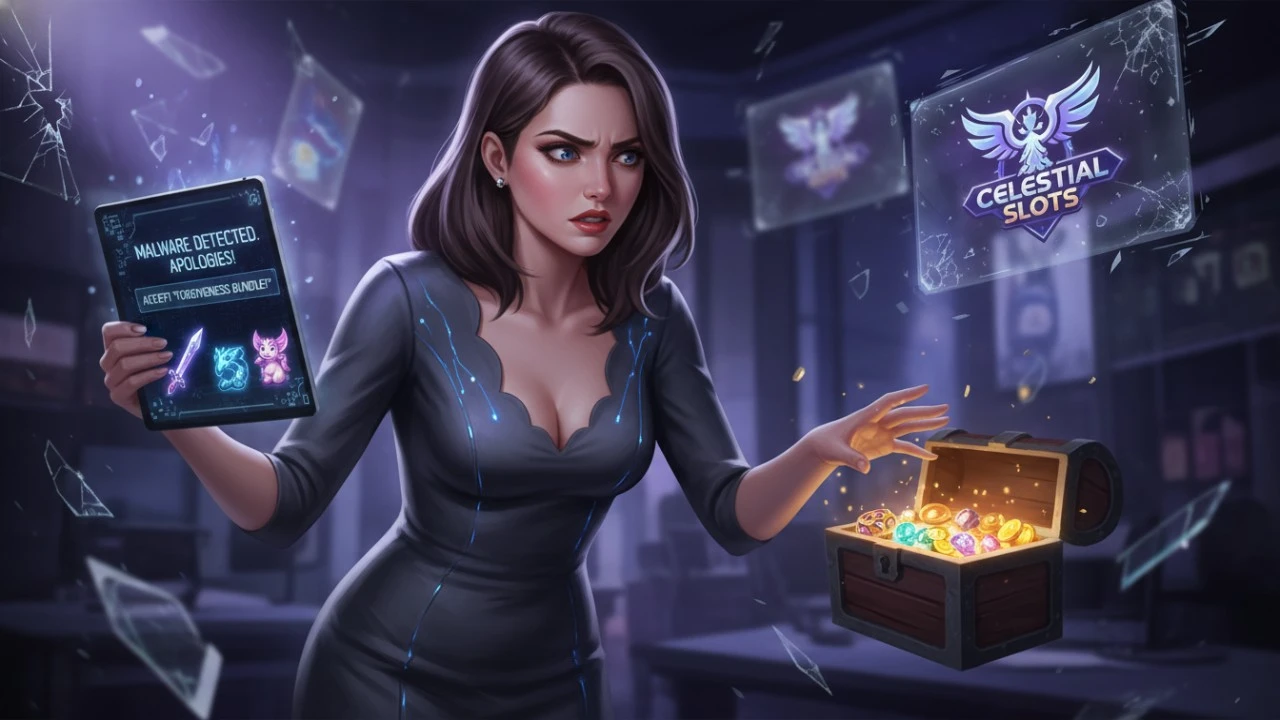
You boot up your PC after a long day at work. You open your favorite gacha game, click the bright yellow “Update” button, and step away to grab a drink while the latest patch downloads. You are expecting a new seasonal event, a fresh banner of colorful characters to gamble for, and maybe a few bug fixes.
You absolutely do not expect the game’s launcher to quietly drop a malicious payload right into your system’s root directory.
In what is rapidly becoming one of the most absurd cybersecurity stories in recent gaming history, a massive gacha title accidentally pushed a malware infected update to its PC player base. Antivirus software immediately started screaming. Windows Defender threw up red flags. Players watched in real time as their system resources spiked, panicking over whether their banking passwords, personal emails, or crypto wallets were actively being siphoned out of their machines.
It was a total public relations nightmare. But it wasn’t the actual breach that sent the internet into a frenzy. It was the developer’s wildly out of touch response.
To compensate players for potentially compromising their digital lives, the studio didn’t immediately offer credit monitoring. They didn’t roll out a massive technical post mortem explaining exactly how their supply chain was compromised.
Instead, they offered free loot boxes.
The Culture of the “Apologem”
To understand how a company could possibly think this was a good idea, you have to understand the deeply ingrained culture of the gacha gaming industry.
In games that rely on randomized digital pulls (essentially slot machines for anime characters), there is a long standing tradition of compensating players whenever the developers mess up. If the servers go down for two hours of emergency maintenance, the developers will drop a handful of premium currency into everyone’s inbox. If a character’s stats are accidentally nerfed, you get free pulls.
The community affectionately calls these “apologems.” It is a psychological trick that works brilliantly. Players actually look forward to minor bugs and server crashes because it means they are about to get free stuff. The developers have successfully conditioned their audience to forgive technical incompetence in exchange for a hit of digital dopamine.
But there is a massive difference between a server timeout and a Trojan horse.
Trading Security for JPEGs
When the developers realized they had shipped malware, their crisis management team simply ran the standard playbook. They took the servers offline, patched out the malicious files, and issued a standard apology letter accompanied by a generous stack of premium currency enough for players to execute a few “ten pulls” on the latest loot box banner.
The whiplash was spectacular.
Players were actively running deep system virus scans, changing their two factor authentication codes, and worrying about identity theft, while the game’s official social media accounts were essentially saying, “Whoops, our bad about the spyware! Here are ten chances to win the new ultra rare waifu!”
It highlights a terrifying disconnect between how game studios view their software and the reality of modern cybersecurity. In North America, Europe, and Oceania, data privacy is not a joke. Regulators issue crippling, multi million dollar fines for negligent data breaches. You simply cannot bribe your way out of a severe security compromise by handing out artificial digital goods that cost you absolutely nothing to manufacture.
The Danger of Intrusive Launchers
This incident isn’t just a funny, isolated public relations disaster. It points to a much darker, structural problem with modern PC gaming.
Over the last few years, game launchers and anti cheat software have become increasingly invasive. To stop hackers, developers now routinely force players to install kernel level drivers. This means the game has the absolute highest level of clearance on your computer. It can see everything, modify anything, and run beneath the surface of your standard antivirus software.
When you give a video game that level of unprecedented access, you are placing immense, blind trust in the studio’s internal security protocols. You are trusting that their servers won’t get hacked, that a rogue employee won’t slip something into the code, and that their update pipeline is flawless.
As this gacha fiasco proves, that trust is often entirely misplaced. When a game with deep system access accidentally ships malware, it bypasses your defenses immediately because you literally gave the software the keys to the kingdom.
The Aftermath
Ultimately, the free loot boxes did exactly what the developers hoped they wouldn’t do: they insulted the intelligence of the player base.
While hardcore addicts might have happily taken the free pulls and ignored the risk, a massive chunk of the community immediately uninstalled the game. Trust is the actual currency of the PC gaming ecosystem. Once you prove that your launcher is a legitimate threat to a user’s operating system, no amount of free premium currency is going to convince a rational person to keep your software on their hard drive.
The era of brushing off massive technical failures with a handful of “apologems” needs to end. If a studio is going to demand deep access to your computer, they need to be held to the security standards of a bank, not a digital casino.